logo

products details

Created with Pixso. Home Created with Pixso. Products Created with Pixso.
Titanium Sheet
Created with Pixso.

Welding Gr2 Titanium Sheet: Purge, Colour, Test

Welding Gr2 Titanium Sheet: Purge, Colour, Test

Brand Name: LHTi
Model Number: Titanium Sheet
MOQ: 50 kg
Payment Terms: T/T,,L/C,Western Union
Supply Ability: 200000 kg per month
Detail Information
Place of Origin:
China
Certification:
ISO9001:2015; TUV; SGS;BV
Standard:
ASTM B265
Technology:
Cold Rolled
Shape:
Square
Surface:
Polished, Acid Washing
Packaging Details:
Plywood box with soft foam for additional protection
Supply Ability:
200000 kg per month
Highlight:

GR2 titanium alloy sheet

,

titanium alloy plate

,

titanium sheet with warranty

Product Description

Welding Gr2 Titanium Sheet: Purge, Colour, Test

A Gr2 sheet bought for a welded vessel is judged twice: once at goods inwards on thickness and certificate, and once at the weld on colour and penetration. The second judgement is decided mostly by the first, because a sheet with rolled in scale, iron contamination or the wrong oxygen level will not weld clean however careful the welder is.

What the Sheet Must Promise Before the Arc Starts

Gr2 is specified by its interstitials: oxygen to 0.25 percent, nitrogen to 0.03, hydrogen to 0.015 and iron to 0.30. Oxygen and nitrogen raise strength and cut ductility, and above the limit the weld pool stiffens and the bead turns grey before the shield has even failed. That is why the certificate matters more on a welded part than on a formed one.

Surface condition comes next. Pickled sheet carries a matte, uniform grey surface that wipes clean; polished sheet carries a bright surface that hides scratches and iron smears. Either is workable, but both must be free of rolled in scale, and neither should be touched with a carbon steel brush, a grinding wheel previously used on steel, or a glove that has handled it. Iron on titanium is the start of a corrosion cell that shows up months later as a rust stain on a clean weld.

Colour Is the Only Field Test That Matters

Titanium reacts with oxygen and nitrogen at welding temperature and the reaction leaves a colour. Silver and light straw mean the shield held; purple, blue and grey mean it did not. The colours are oxides a few microns thick, and on a pressure part they are a reason to cut the joint out, not to polish it, because the contamination extends below the surface and the hardness under it is what cracks.

Colour after welding What it says about the shield Typical cause What to do Acceptance
Silver or light straw The gas held to the end of the weld Correct flow, clean metal Nothing Accept on most procedures
Deep straw to bronze Some oxygen reached the pool Draught, short trailing shield Brush and pickle, check hardness Accept with a note
Purple to blue The shield failed while cooling Gas cut early, poor purge dam Cut out and reweld Reject on pressure parts
Grey or white flaky Heavy contamination No purge, wet gas, grease Remove the whole zone Reject, do not pickle
Black soot or spots Hydrocarbon or iron on the surface Degreasing skipped, steel brush Grind back and retest Reject the joint

The colour check has to happen before the weld cools completely, and on both faces. A root that looks silver from above can be blue underneath if the purge stopped early, and the underside of a root is exactly where a chemical vessel corrodes first.

Purge, Flow and the Trailing Shield

Argon purge on the back of a titanium weld is not optional. The aim is below 50 parts per million of oxygen in the dammed volume, which is reached by sealing the joint, flushing for a period measured in minutes per metre, and checking with an oxygen meter rather than by ear. Soluble dams and water soluble tape make the check possible; cardboard and rags do not.

On the top side, a trailing shield covers the bead while it cools below about 400 degrees Celsius. A standard gas cup covers the pool and nothing else, so the bead turns straw a few millimetres behind the torch on a fast pass. Wide shields with a second gas line are the usual answer on sheet thicker than about 3 mm, and they cost less than a repair.

Distortion on Thin Sheet

Thin Gr2 sheet moves when it is welded, because the weld shrinks and the sheet has little stiffness to resist it. The sequence matters more than the current: tack on a pattern that lets each seam pull against the next, backstep long seams, chill with copper or a wet backing bar, and keep the heat input low enough that the colour stays silver. A 1 mm sheet can buckle 5 mm over a metre with a single careless pass.

Gr2 does not normally need a post weld heat treatment, and a full anneal would soften a cold formed part that was strengthened by working. Where a stress relief is specified for dimensional reasons, it is done at 540 to 650 degrees Celsius in vacuum or inert gas, with the colour and the atmosphere controlled as carefully as the weld itself.

Filler, Joint Design and the Certificate

Gr2 is welded with ERTi-2 filler, or autogenously on thin sheet where the joint is a square butt with no gap and full penetration is achievable in one pass. A consumable insert helps on a root that must be smooth. Joint preparation should avoid a sharp land, and the fit up gap should be tight enough that the purge is not diluted by the room.

Field on the order Why it decides the delivery A weak version What arrives instead undefined
Grade and UNS number Fixes oxygen and the strength floor Gr2 Any heat inside the Gr2 range undefined
Thickness and width Sets the tolerance and flatness table 2 mm Whatever the coil run allowed undefined
Surface Decides pickling or polishing Clean Rolled scale on one face undefined
Certificate level 3.1 is mill signed, 3.2 adds a witness A certificate A 3.1 when the client asked for 3.2 undefined
Edge condition Affects fit up and weld prep Cut A sheared edge with cold work in it undefined

3.1 or 3.2, and Why the Difference Is Paid For

An EN 10204 3.1 certificate is issued by the mill inspection department on its own authority; a 3.2 certificate adds an independent inspector or an agreed third party who witnesses the tests. For a pressure vessel the difference is not paperwork, it is who signs. If the client asks for 3.2, the order has to say so before the heat is rolled, because the witness cannot be added afterwards.

Ordering Notes

Write the grade with the UNS number, the thickness and width with their tolerances, the surface, the edge, the certificate level, and the standard the lot is made to, ASTM B265 or its ASME equivalent SB265. Add a note that the sheet is for welding if the surface must be free of scale and iron, and ask for the heat number to be marked on each sheet so the weld map can point back to the certificate.

Product Images

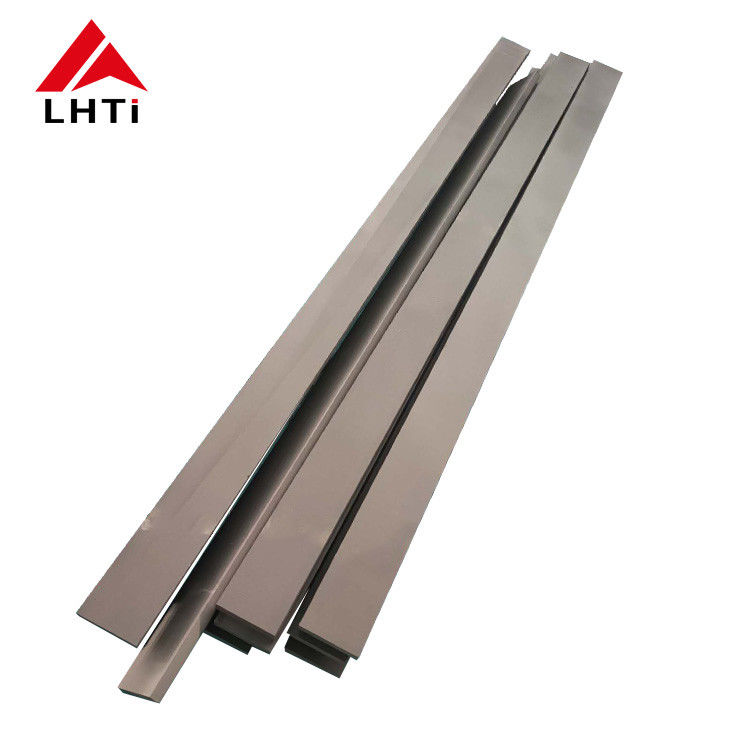
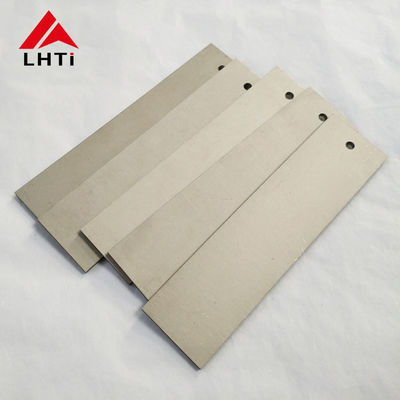
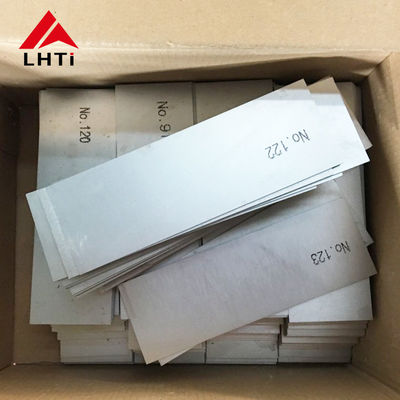
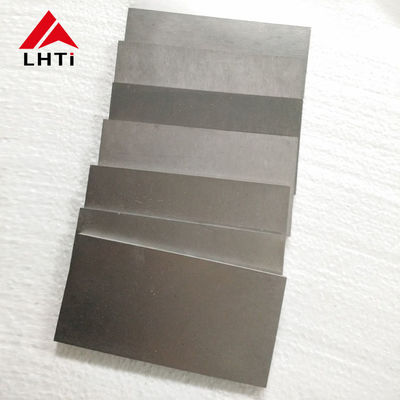
Gr2 titanium sheet for welded chemical equipment