logo

products details

Created with Pixso. Home Created with Pixso. Products Created with Pixso.
Titanium Rod
Created with Pixso.

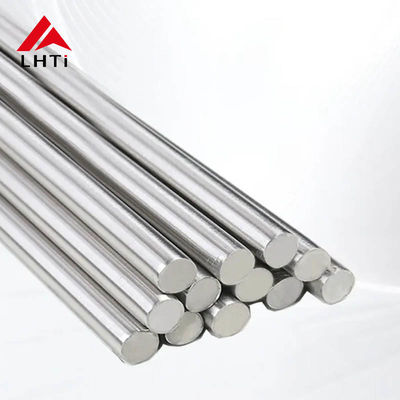
ASTM B348 Gr2 & Gr5 Titanium Rod and Bar for Medical Applications with Biocompatible and Corrosion Resistant Properties

ASTM B348 Gr2 & Gr5 Titanium Rod and Bar for Medical Applications with Biocompatible and Corrosion Resistant Properties

Brand Name: LHTi
Model Number: Titanium Rod
MOQ: 100 pieces
Price: negotiable
Payment Terms: L/C,D/A,D/P,T/T,Western Union,MoneyGram
Supply Ability: 200 Ton/Tons Per Month
Detail Information
Place of Origin:
Baoji, China
Certification:
ISO9001,CE,etc
Situation:
Annealed
Meltingpoint:
1660℃
Elongation:
20%
Cold Rolling:
As Customer Available
Specific Use:
Heating And Cooling
Surface:
Bright,Polished,Pickling
Regular Size:
4*8ft/ 4*10ft/ 1500*3000mm
Processing:
Forging Rolling Annealing
Outer Diameter:
9.52/12.7/15.9/19.1/25.4/32/33.4/38.1mm
Packaging Details:
Plywood case or pallet, or as per your requirement
Supply Ability:
200 Ton/Tons Per Month
Highlight:

ASTM B348 Titanium Bar

,

Medical Processing Titanium Bar

,

Rolling Annealing Titanium Bar

Product Description
ASTM B348 Gr2 & Gr5 Titanium Bars/Rods – Medical Applications

Titanium and its alloys, particularly Grade 2 (commercially pure titanium) and Grade 5 (Ti-6Al-4V, an alloy of titanium, aluminum, and vanadium), are widely used in medical applications due to their outstanding properties, including biocompatibility, strength, and corrosion resistance. ASTM B348 is the specification that defines the requirements for titanium bars, rods, and billets used in medical applications.

Titanium Grade 2 (Commercially Pure Titanium)

Grade 2 titanium is the most widely used commercially pure titanium. It is known for its excellent corrosion resistance and biocompatibility, making it ideal for applications where strength-to-weight ratio and resistance to bodily fluids are critical.

Key Properties of Titanium Grade 2:
  • Corrosion Resistance: Excellent resistance to corrosion, especially in chloride environments like bodily fluids, which is crucial for medical implants in direct contact with the human body.
  • Biocompatibility: Highly biocompatible, meaning it does not cause adverse reactions in the body. Commonly used in long-term implants such as dental implants, bone screws, and joint replacements.
  • Strength and Lightweight: Good mechanical properties providing sufficient strength for medical applications while remaining lightweight, beneficial for implants that need to maintain biomechanical performance without adding excess weight.
  • Weldability and Formability: Relatively easy to weld, machine, and form into different shapes such as bars, rods, or round bars, making it versatile for a wide range of medical uses.
Mechanical Properties:
  • Tensile Strength: 345 MPa (50 ksi)
  • Yield Strength: 275 MPa (40 ksi)
  • Elongation: 20%
Applications of Grade 2 Titanium in Medical Implants:
  • Orthopedic Implants: Used in production of screws, plates, and pins for bone fracture repair.
  • Dental Implants: Frequently used in dental implants due to biocompatibility and long-term stability in the oral environment.
  • Surgical Tools and Devices: Commonly used in surgical instruments, scalpels, and forceps due to non-reactivity and strength.
Titanium Grade 5 (Ti-6Al-4V) - Titanium Alloy

Grade 5 titanium, or Ti-6Al-4V, is an alloy composed of 90% titanium, 6% aluminum, and 4% vanadium. It is one of the most commonly used titanium alloys, known for its higher strength, good fatigue resistance, and improved mechanical properties over pure titanium grades.

Key Properties of Titanium Grade 5:
  • Higher Strength: Significantly higher tensile strength than commercially pure grades, making it excellent for applications requiring extra durability and ability to withstand high stress.
  • Corrosion Resistance: Maintains excellent corrosion resistance, particularly in environments exposed to bodily fluids, with enhanced strength and fatigue resistance.
  • Biocompatibility: Highly biocompatible and popular choice for implants and surgical devices that remain in the body over extended periods.
  • Fatigue Resistance: Addition of aluminum and vanadium significantly improves fatigue resistance, making it well-suited for applications such as joint replacements or bone screws that experience continuous stress.
  • Weldability and Fabricability: Slightly harder to weld and machine than Grade 2 but remains highly workable with the right equipment. Often used for precision components where higher strength is required.
Mechanical Properties:
  • Tensile Strength: 895 MPa (130 ksi)
  • Yield Strength: 828 MPa (120 ksi)
  • Elongation: 10%
Applications of Grade 5 Titanium in Medical Implants:
  • Joint Replacements: Commonly used for hip, knee, and shoulder joint replacements due to strength and fatigue resistance.
  • Bone Screws and Plates: Often used for screws, plates, and pins used in fracture fixation due to higher strength and ability to withstand significant loading.
  • Dental Implants: Sometimes used for dental implants in cases requiring higher strength, particularly in patients with higher activity levels.
  • Surgical Tools and Equipment: Used for high-stress surgical instruments due to strength and biocompatibility.
Summary of Titanium Bar Grades for Medical Applications
Titanium Grade Composition Tensile Strength Yield Strength Applications
Grade 2 (CP Ti) 99% Titanium (Commercially Pure) 345 MPa (50 ksi) 275 MPa (40 ksi) Orthopedic implants, dental implants, surgical tools
Grade 5 (Ti-6Al-4V) 90% Titanium, 6% Aluminum, 4% Vanadium 895 MPa (130 ksi) 828 MPa (120 ksi) Joint replacements, bone screws, dental implants, surgical instruments