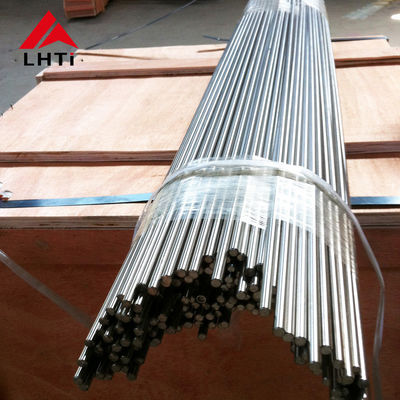
| Brand Name: | LHTi |
| Model Number: | Titanium Rod |
| MOQ: | 30 kg |
| Price: | $20.00~$30.00/kg |
| Payment Terms: | T/T,,L/C,Western Union,Paypal |
| Supply Ability: | 300000 kg per month |
Gr1 Titanium Bar: The Grade You Choose for Ductility
Gr1 is the softest and most formable of the commercially pure titanium grades, and that single property is the reason to buy it. This page explains where Gr1 sits against Gr2 and the alloys, which standard actually applies to a Gr1 bar, and what the diameter, condition and surface options mean on a purchase order.
Where Gr1 Sits in the Family
The difference between Gr1 and Gr2 is interstitial content, not alloying. Gr1 holds oxygen to 0.18 percent and iron to 0.20 percent, against 0.25 and 0.30 for Gr2. Lower interstitials mean a lower tensile strength, 240 MPa instead of 345, and a higher elongation, 24 percent instead of 20. Nothing else separates them: both are unalloyed, both are fully corrosion resistant, both weld cleanly.
| Grade | Oxygen max | Iron max | Tensile / yield MPa | Elongation |
|---|---|---|---|---|
| Gr1 | 0.18% | 0.20% | 240 / 138 | 24% |
| Gr2 | 0.25% | 0.30% | 345 / 275 | 20% |
| Gr5 Ti-6Al-4V | 0.20% | 0.40% | 895 / 828 | 10% |
| Gr7 | 0.25% | 0.30% | 345 / 275 | 20% |
| Gr12 | 0.25% | 0.30% | 438 / 345 | 18% |
That gap of about 100 MPa is small in absolute terms but decisive in forming. A part that needs several cold forming passes, a tight bend radius or a swage will crack from Gr2 where Gr1 flows; a part that carries load will be over designed in Gr1 where Gr2 would do. Choosing between them is a question about the process, not about the metal.
What Twenty Four Percent Elongation Buys
High elongation is the licence to deform. It allows cold bending to a radius close to the bar diameter, coiling, heading, swaging and thread rolling instead of thread cutting. Rolled threads are stronger than cut threads because the grain follows the thread root rather than being severed at it, and Gr1 takes that rolling without the surface cracking that a harder grade can show at small diameters.
The same softness is a machining liability. Gr1 is gummy, it gallops rather than chips, it work hardens under a dull tool and it galls against stainless and against itself. Sharp positive geometry, high feed, copious coolant and a rigid setup matter more with Gr1 than with Gr5, and a shop that runs Gr2 successfully is not automatically set up for Gr1.
Which Standard Applies to a Gr1 Bar
The original page lists ASTM B348, F67, F136 and AMS 4928 together. Only two of those can apply to Gr1. B348 is the bar, billet and forging stock standard and is the correct general document. F67 covers wrought commercially pure titanium for surgical implants in Gr1 to Gr4. F136 covers Ti-6Al-4V ELI, which is Gr23, and AMS 4928 covers Ti-6Al-4V, so neither can be used to certify a Gr1 bar.
| Standard | Covers | Grades that apply | Typical product | Watch out for |
|---|---|---|---|---|
| ASTM B348 | Titanium bar, billet, forging stock | Gr1 to Gr5, 7, 12 | Round, square, hex bar | The bar standard itself |
| ASTM F67 | Wrought CP titanium for surgical implants | Gr1 to Gr4 | Medical bar and wire | Not for Gr5 |
| ASTM F136 | Ti-6Al-4V ELI for implants | Gr23 only | Implant bar | Cannot certify Gr1 |
| AMS 4928 | Ti-6Al-4V bar, wire and forgings | Gr5 only | Aerospace bar | Not a Gr1 document |
| ASTM B381 | Titanium forgings | Gr1 to Gr5, 7, 12 | Rings, discs, blocks | Forgings, not bar stock |
This matters at goods inwards. A certificate that cites F136 against a Gr1 heat is a paperwork error at best and a substitution at worst, and a buyer who accepts it has no defence if the bar later fails a chemistry check. Ask for the standard and the grade on the same line of the certificate, and check that the two agree.
Diameter, Length and Condition
The attribute block on this page gives a diameter range of 3 to 350 mm, while the specification table further down gives 0.8 to 500 mm. Both are real, but they describe different things: 3 to 350 mm is the range offered as standard stock on this page, and 0.8 to 500 mm is the capability of the family. For a size outside the first range, ask before assuming stock.
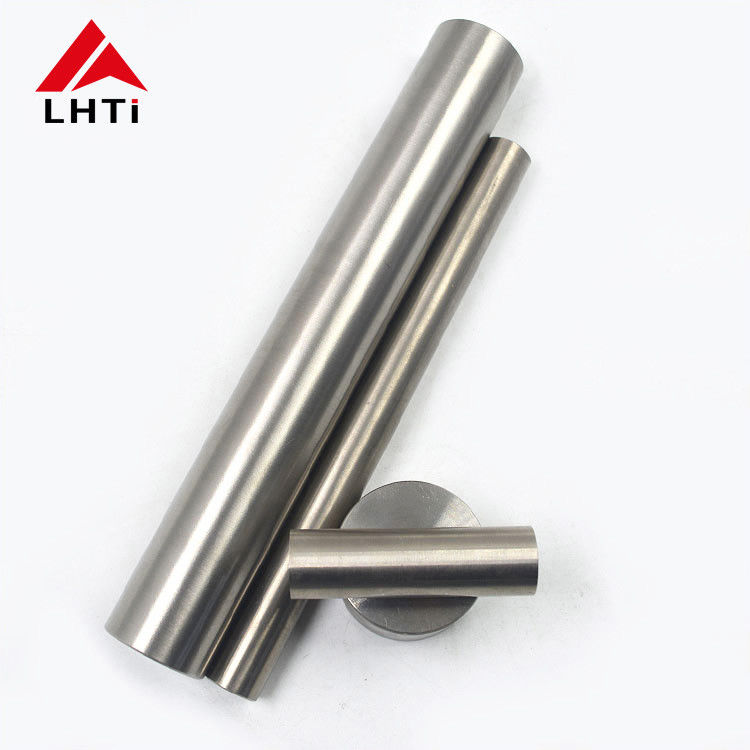
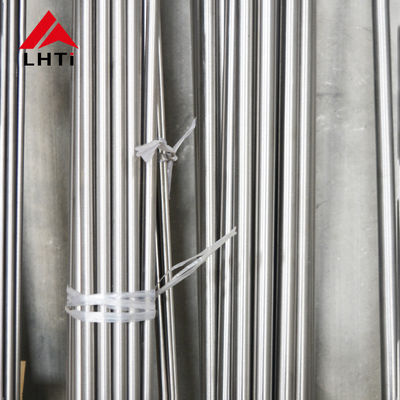
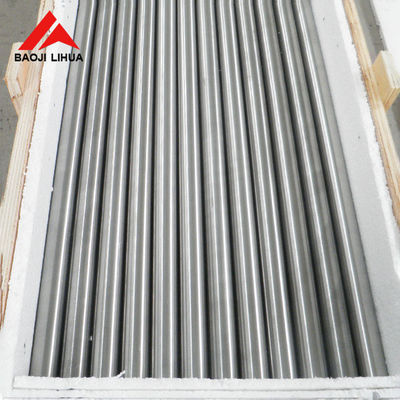
Length is quoted at 500 to 6000 mm or to customer request. Condition is annealed, marked M, with cold rolled and hot rolled also available. Surface is bright, polished or pickled, and the polished option is specified where a crack free skin matters for fatigue or for a visible part. Two flat ends and a controlled length tolerance are worth writing into the order, because sawn bar that is not squared costs more at the machine than it saves at the mill.
Applications Where Gr1 Wins
Gr1 is the usual choice for plating racks, anodes, heat exchanger components that will be rolled or bent, chemical process hardware, cryogenic parts and medical instruments that need forming rather than strength. In seawater it resists attack as well as Gr2, but its lower yield means thinner sections deflect more, so pressure retaining parts normally move up to Gr2 or Gr7.
Where a part must be both formed and strong, the answer is usually to form in Gr1 and then specify Gr2 for the finished item, or to form Gr2 at temperature. Neither is a substitution to make silently, and a drawing that names Gr1 should not be supplied in Gr2 on the argument that it is stronger.
Ordering Notes
State the standard and the grade together, the diameter with its tolerance class, the length and the end finish, the condition and the surface, and the test package. A 3.1 certificate to EN 10204 with chemistry, tensile results and the heat number is normal, and a PMI check on delivery is cheap insurance. The die forging process description carried over from the original page is background on how forgings are made from bar; it is not the route by which a rolled or drawn round bar is produced, and it should not be read as a process specification for this product.
Product Images
![]()
![]()