logo

products details

Created with Pixso. Home Created with Pixso. Products Created with Pixso.
Titanium Disc
Created with Pixso.

Titanium Disc 1300 mm: Flatness After Cutting

Titanium Disc 1300 mm: Flatness After Cutting

Brand Name: LHTi
Model Number: Titanium disc
MOQ: 1 piece
Price: usd 50-100/pc
Payment Terms: L/C,D/A,D/P,T/T,Western Union
Supply Ability: 5000pcs/month
Detail Information
Place of Origin:
China
Certification:
ISO9001
Product Name:
Titanium Disc
Application:
Industrial
Color:
Silver
Shape:
Round
Surface Treatment:
Polished
Material:
Titanium Alloy
Diameter:
150mm--1300mm Or As Your Requirment
Package:
Plywood Case Or According Your Requirment
Packaging Details:
standard export plywood case
Supply Ability:
5000pcs/month
Highlight:

polished titanium disc 150mm

,

custom titanium disc silver finish

,

titanium disc 1300mm diameter

Product Description

Titanium Disc 1300 mm: Flatness After Cutting

A disc looks like the simplest titanium part on a price list, and it is the one where a buyer most often gets a round plate that will not sit flat. The reason is geometry: a disc is thin relative to its diameter, so it is stiff in its own plane and flexible across it, and any imbalance between the two faces shows up as a bow or a dish once the part is off the machine. Diameter and thickness on this page are a cutting envelope, from 150 to 1300 millimetres across and 35 to 550 millimetres thick, and the way a blank is made inside that envelope decides whether the finished part is flat.

Diameter and Thickness Are Two Different Supply Routes

Up to about 100 millimetres thick, a disc is normally cut from plate: the plate is rolled to thickness and the disc is sawed or water jet cut from it, so thickness is whatever the mill rolled and only the faces are machined. Above that, a 400 or 550 millimetre thick disc cannot come from plate, and the blank is sawn from a forged or rolled block, which means the thickness is a sawing decision and both faces have to be machined true.

That is why the same diameter can be a plate blank or a block slice, and why the two behave differently after machining. A plate carries its own rolling texture and a modest internal stress; a block slice carries the stress of the whole forging, released on one side when the first face is cut. A disc sawn from a block and machined on one face only will bow towards the cut face, every time.

Step What it controls What goes wrong How it is checked
Sawing the blank Diameter and thickness allowance A wavy cut leaves no clean face to machine Cut face square to the axis, allowance left
Rough facing Removing the saw marks evenly Equal cuts on both faces avoid a built in bow Thickness at four points round the rim
Stress relief, if thick Flatness after the metal is released Skipping it lets the disc move days later Flatness re measured after the relief cycle
Finish facing Thickness, parallelism and flatness One light pass on a bowed disc copies the bow Flatness on a surface plate, thickness by micrometer
Edge and polish Burr, chamfer and surface finish A sharp rim cuts the crate and the gasket Edge break by hand check, finish by comparator
Why a Thick Disc Bows, and What Prevents It

When metal is removed from one face of a stressed blank, the balance of the remaining section changes and the part curves to find a new equilibrium. The cure is procedural rather than metallurgical: remove similar amounts from both faces in the roughing stage, leave enough allowance for a finish pass on each side, and where the blank is thick enough to carry real stress, interpose a stress relief anneal between roughing and finishing in a vacuum or inert atmosphere.

The order of operations matters more than the size of the last cut. A finish pass of a few tenths on a disc that is already bowed simply copies the bow into a smoother surface, and the part measures correct in thickness and wrong in flatness. That is the failure that passes a dimensional inspection and fails on the machine table.

The Tolerance That Actually Matters Is Flatness

Thickness is easy to measure and easy to hold; flatness is the one that decides whether a disc can be clamped, lapped or bolted. On a disc of half a metre across, a bow of two or three tenths of a millimetre is invisible to the eye and enough to rock on a surface plate. Flatness should be specified as a number, measured on a plate or by a dial indicator on a rotating table, and stated over the full face rather than at the rim only.

Parallelism between the two faces is the companion tolerance, and it is the one that lets a disc sit in a fixture without shimming. A disc that is flat but wedge shaped will clamp at one edge and open at the other, which matters wherever the part is used as a spacer, a backing plate or a target.

Polishing Is Not a Flatness Operation

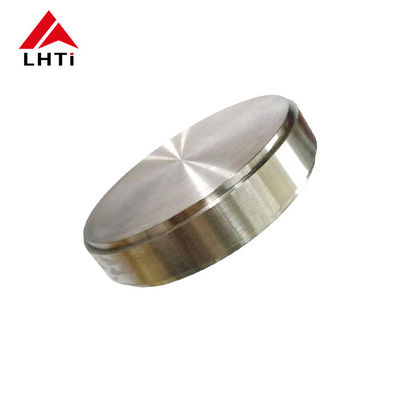
The polished silver finish on this range is a surface condition, and it is worth being clear about what it does and does not do. Polishing improves appearance, makes the part easier to wipe down and removes the fine tool marks that hold contamination, which is useful in clean service. It does not remove a bow, and a mirror polish over a dished face gives a very convincing looking part that still will not sit flat.

Polishing also comes after the last dimensional operation, so any polishing that removes measurable metal can take a disc out of thickness tolerance at the rim. The safe sequence is to face, check flatness and thickness, then polish with a controlled removal, and to name on the order which faces are polished and to what finish.

Mass, Handling and the Practical Limit

Weight grows with the square of the diameter and in proportion to thickness, and at the top of this range it dominates the job. A disc 1300 millimetres across and 550 millimetres thick is roughly three quarters of a tonne of titanium, which needs lifting points, a crate built for it and a machine tool that can turn it. Even a 1300 by 35 millimetre disc is over two hundred kilograms.

It is worth quoting the mass with the part, both for freight and for the workshop, and worth deciding early whether the disc is a blank to be machined further or a finished part. A blank needs extra thickness and diameter as machining allowance; a finished part needs tolerances that a blank would not be held to.

Supply and What to Write on the Order

This range is supplied as round titanium alloy blanks, polished and packed in plywood cases, with diameter and thickness to requirement and the quantity quoted per size. Because the page gives a range rather than a grade, the grade has to be settled on the order: a commercially pure grade for corrosion duty, an alloy where strength per unit mass matters, and the UNS number written next to it so that the certificate and the part agree.

What the page states What it decides Where it needs care What to write on the order
Diameter 150 to 1300 mm The saw or the plate width needed At 1300 mm the blank is near the plate limit Diameter with plus minus tolerance
Thickness 35 to 550 mm Plate stock or block stock Above roughly 100 mm it is sawn from a block Thickness and whether it is nominal or machined
Polished surface Appearance and wipe down A polish does not correct flatness Surface finish and which faces are polished
Round shape Turning, balance, seating Out of round shows up as a rocking part Roundness or run out limit
Titanium alloy Strength and corrosion behaviour The page does not name the grade Grade and UNS number, one of them

A complete order reads: diameter and its tolerance, thickness and whether it is nominal or machined, flatness, parallelism, roundness, which faces are polished and to what finish, edge condition, grade with UNS number, and whether the disc is a blank or a finished part. Add the service and the temperature if the grade is still open. Those few lines decide whether what arrives can be clamped and used, or has to be re machined before it earns its place.

Product Images

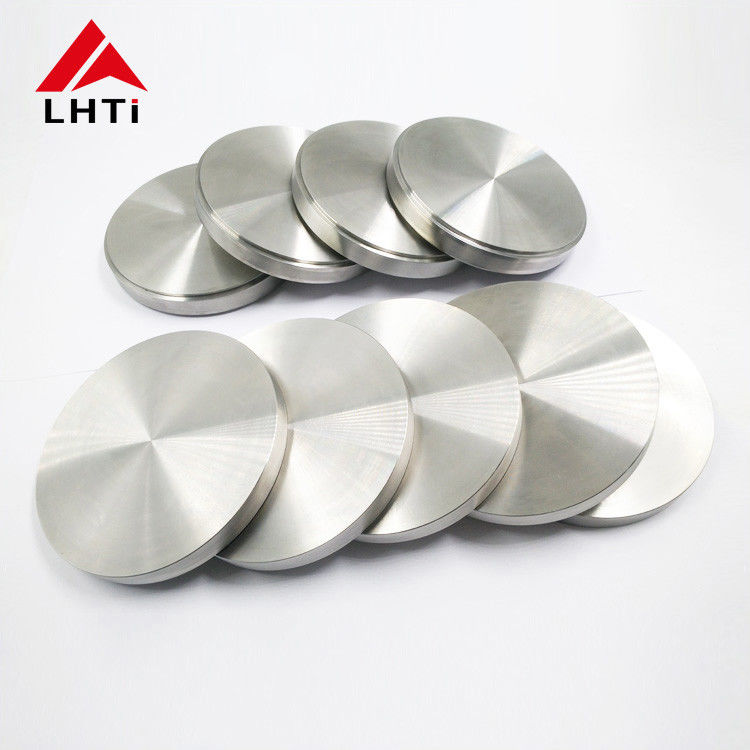
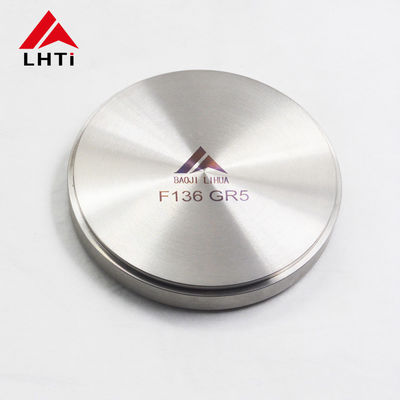
Polished titanium disc, round blank cut to diameter